Your Building Is Leaking. Should You Coat It or Grout It?
Published: 26th Aug 2026•By BlockPilot
Co-Op Housing Insights
Should a housing society choose waterproof coating or injection grouting?
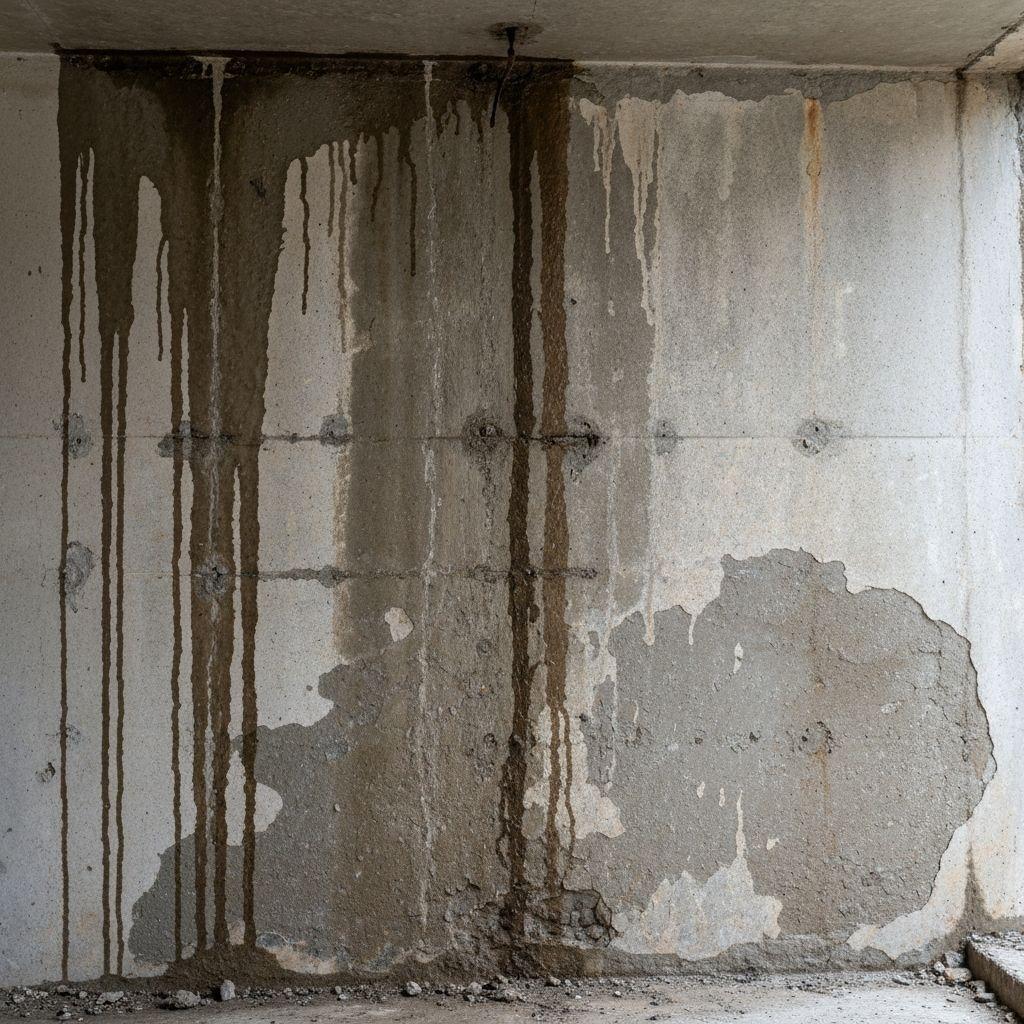
It depends on the source of the leakage. Waterproof coating protects exposed surfaces from water penetration, while injection grouting seals cracks and voids from within the structure. Choosing the correct solution requires identifying the cause of leakage rather than treating only the visible symptoms. Water leakage is one of the most common maintenance challenges faced by housing societies. During the monsoon, complaints about damp walls, ceiling seepage, terrace leaks, basement moisture, and bathroom leakages often increase. In response, many committees immediately ask contractors for quotations without first understanding the actual source of the problem. One of the most common questions is whether the building needs waterproof coating or injection grouting. Although both methods are widely used, they solve different problems. Choosing the wrong solution may temporarily hide symptoms while allowing the underlying damage to continue inside the building. A successful waterproofing project begins with diagnosis, not products. Understanding the difference between coating and injection grouting helps housing societies make informed decisions and avoid unnecessary expenditure.
1. Every Water Leakage Problem Does Not Need the Same Solution
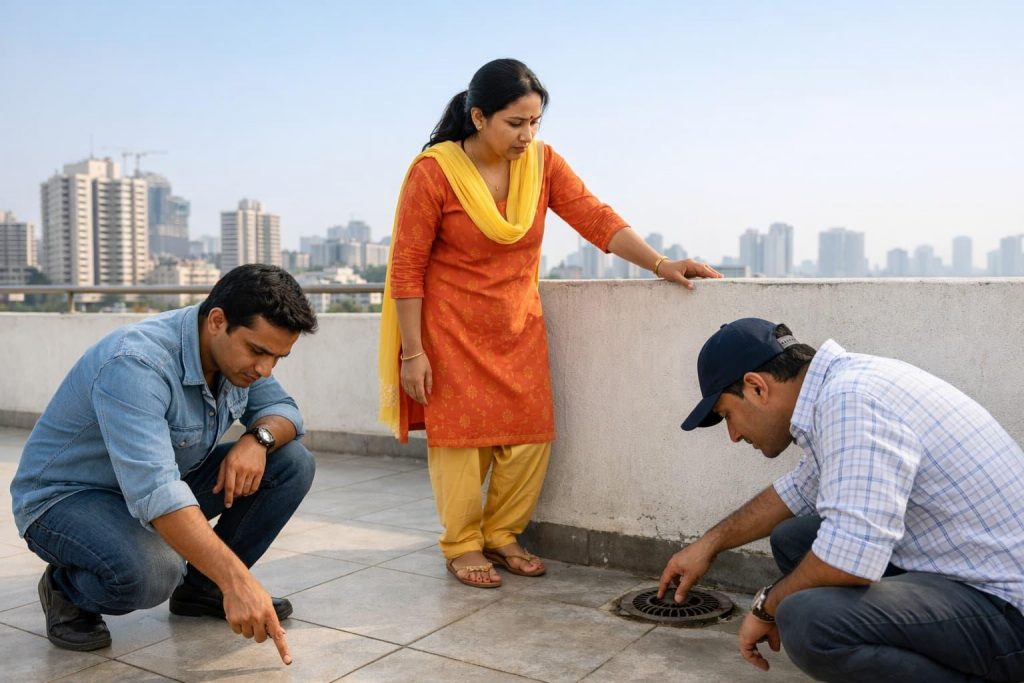
Many committees assume they can solve all leakage problems by applying a waterproof coating. While coatings are effective in many situations, they cannot repair structural cracks, internal voids, or water paths that develop inside concrete. Water can enter a building through terraces, external walls, expansion joints, plumbing lines, construction joints, or structural cracks. The visible damp patch inside a flat is often only the final point where the water appears. The actual entry point may be several metres away. Just as societies investigate the root cause before major civil repairs, waterproofing should also begin with identifying how and where water is travelling through the structure before selecting the treatment method.
2. Waterproof Coating Protects the Surface
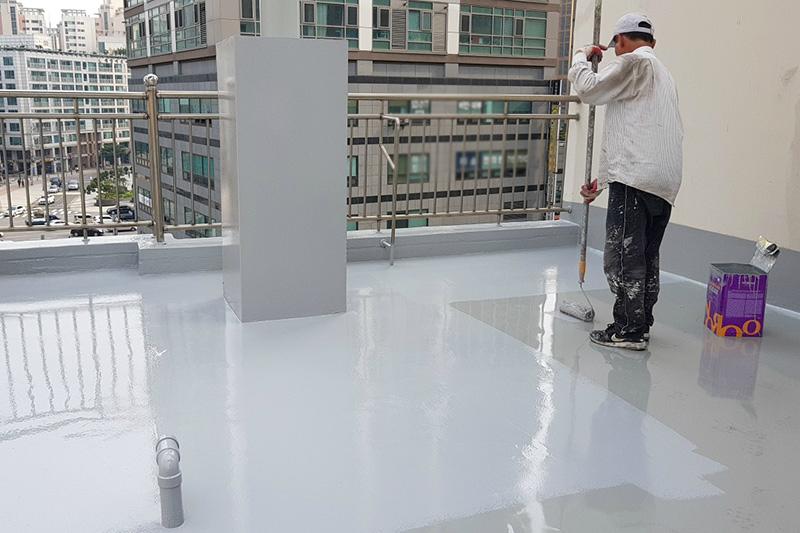
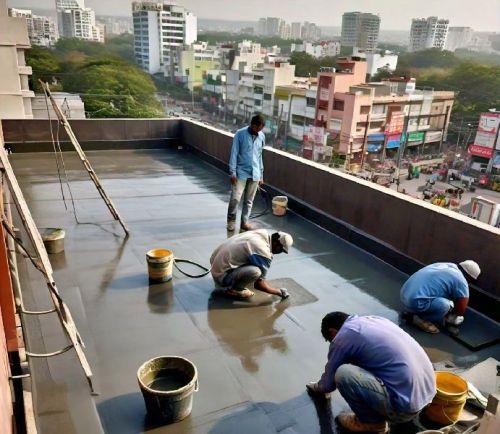
Waterproof coatings are designed to create a protective barrier over exposed surfaces. They are commonly used on terraces, podiums, external walls, balconies, overhead water tanks, and other areas directly exposed to rain or standing water. When the surface is properly prepared and the coating system is selected correctly, it helps prevent future water penetration. However, coatings work best when the substrate is sound. If water is already travelling through internal cracks or structural gaps, applying a coating over the surface may not permanently solve the problem. Many housing societies repeat waterproof coating every few years because the underlying cause of leakage was never addressed. The coating itself may not have failed. It was simply used where another solution was required.
3. Injection Grouting Treats Leakage From Within the Structure
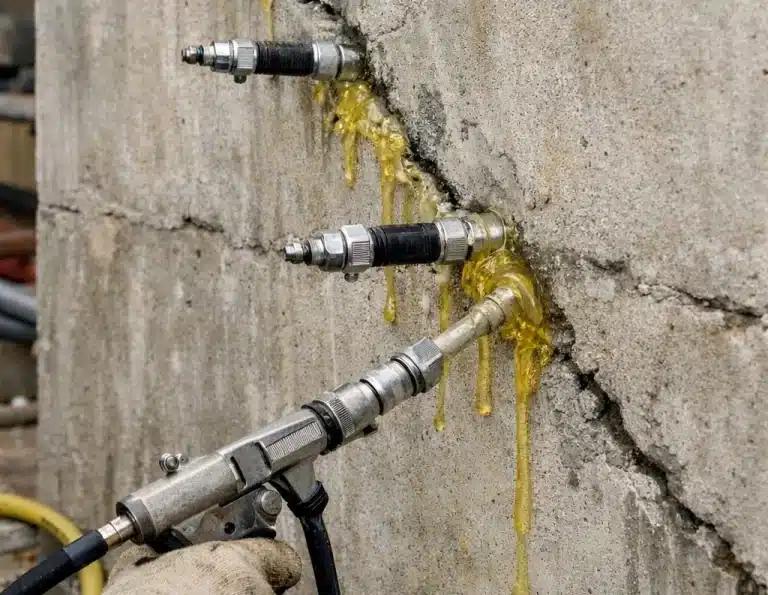
Injection grouting follows a completely different approach. Instead of protecting the outer surface, specialised grouting materials are injected into cracks, joints, honeycombing, or voids inside the concrete to block the path through which water is travelling. This technique is commonly used for basement walls, lift pits, retaining walls, construction joints, expansion joints, underground structures, and active crack leakages where accessing the external face is difficult or impossible. Injection grouting should not be viewed as a replacement for waterproof coating. Both methods serve different purposes. In many buildings, the most effective solution involves using injection grouting to stop active leakage followed by waterproof coating to protect the exposed surface from future water ingress.
4. Wrong Diagnosis Often Leads to Repeated Waterproofing Expenses
One of the biggest reasons waterproofing projects fail is not because the material is poor, but because the treatment does not match the actual problem. A terrace coating may be applied when the leakage originates from a plumbing shaft. Injection grouting may be carried out even though the real issue is deteriorated external plaster. Many housing societies experience recurring leakages because every contractor proposes a different solution based on experience rather than investigation. Without a proper inspection, committees often compare quotations that recommend completely different methods, making vendor selection difficult. Just as societies avoid making financial decisions without reviewing proper documentation, waterproofing decisions should also be based on technical assessment rather than assumptions. Correct diagnosis usually saves far more money than repeated repairs.
5. The Right Waterproofing Decision Begins With Building Assessment
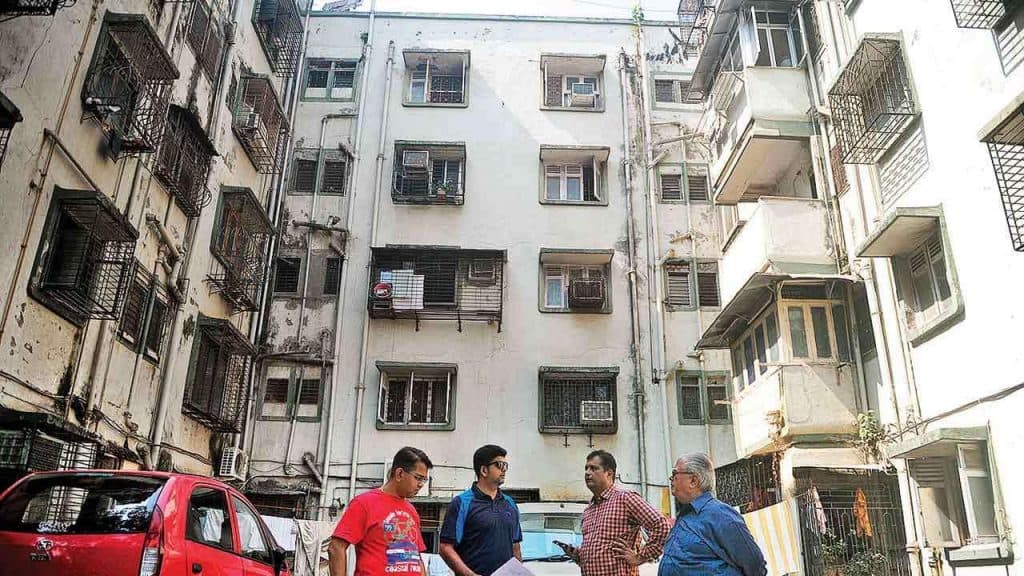
Before selecting any waterproofing method, housing societies should first understand the building’s condition, the age of the structure, previous repair history, crack patterns, construction details, and the exact path through which water is entering. A systematic assessment helps determine whether the problem requires surface protection, crack sealing, plumbing repairs, structural rectification, or a combination of treatments. In many cases, multiple waterproofing techniques are used together because buildings rarely experience only one type of leakage. The objective should never be to choose between coating and injection grouting based on cost alone. The objective should be to apply the right engineering solution for the specific problem. When diagnosis comes first, waterproofing becomes more durable, maintenance costs reduce, and repeated leakage complaints become far less frequent.
Conclusion
There is no universal waterproofing solution for every housing society. Waterproof coating and injection grouting are both valuable techniques, but they are designed to solve different problems. Treating every leakage with the same method often leads to repeated failures, higher maintenance costs, and frustration for residents. Successful housing societies do not begin waterproofing by selecting a product or contractor. They begin by understanding the building. Once the root cause of leakage is identified, choosing the appropriate treatment becomes a technical decision rather than a guessing exercise. That approach delivers longer-lasting repairs, better value for money, and greater confidence in every maintenance project.