Why Housing Society Plumbing Needs a Pipeline Map Before Repairs Begin
Published: 26th Oct 2026•By BlockPilot
Co-Op Housing Insights
Plumbing problems in housing societies often appear simple. A flat reports low water pressure, a bathroom develops seepage, a drainage line gets blocked, or water starts leaking through a wall. The immediate response is usually to call a plumber and locate the problem on site. But in older or complex buildings, the visible problem may be far away from the actual source. Without knowing how the building’s pipelines are routed, societies can end up breaking walls, opening shafts, replacing the wrong section, or repeatedly repairing the same problem. A pipeline map changes this approach. It gives the committee and its vendors a clearer understanding of the building’s plumbing network before repair work begins.
1. Most Societies Know Their Plumbing Problems but Not Their Pipeline Network
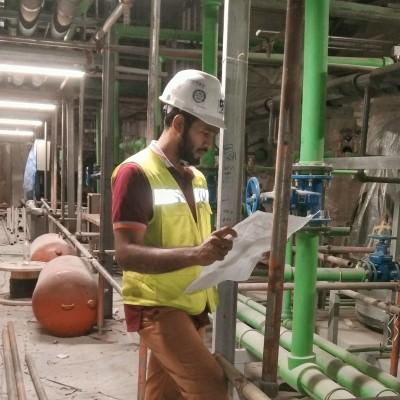
Over the years, housing societies carry out numerous plumbing modifications. Pipes are replaced, additional connections are installed, flats undergo renovations, shafts are altered, and old pipelines are abandoned or rerouted. As a result, the actual plumbing network may become very different from the original building drawings. In many societies, there is no updated record showing where the main water supply lines, drainage lines, sewage lines, overhead tank connections, underground tank connections, pumps, valves, shafts, and common pipelines are located. Plumbers may know certain routes through experience, but that knowledge often remains with individuals rather than with the society. This creates a major dependency. When an experienced plumber leaves or a new contractor is appointed, the committee may have to rediscover the building’s plumbing system. A pipeline map converts that informal knowledge into a permanent record for the society.
2. A Visible Leak Does Not Always Show the Real Problem
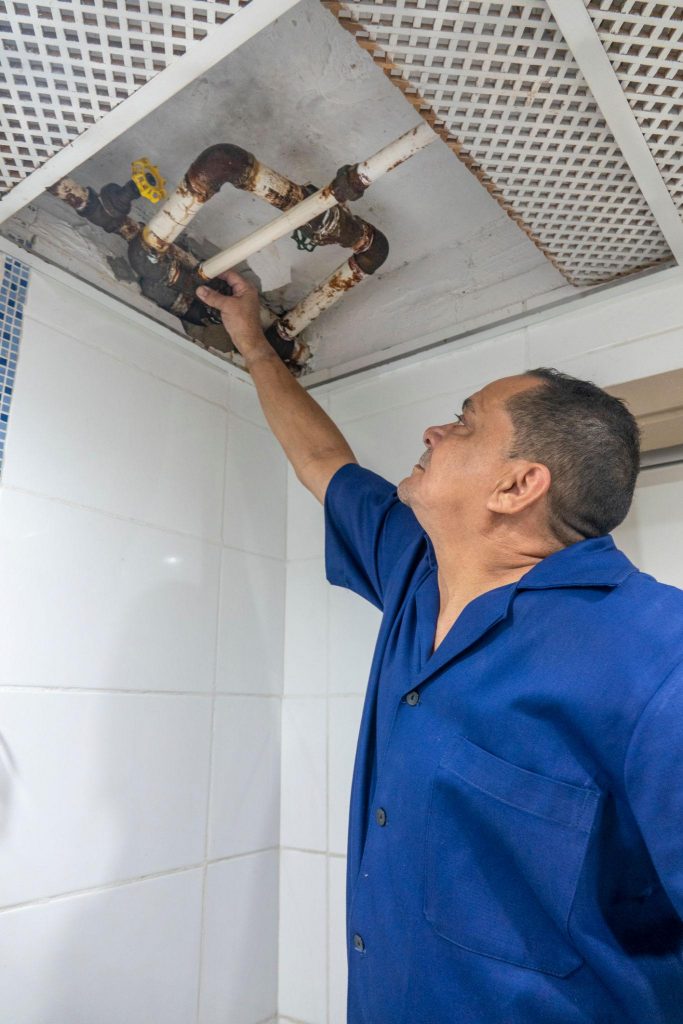
One of the biggest plumbing mistakes is treating the point where water appears as the point where the problem started. Water can travel through concrete, walls, slabs, shafts, and joints before becoming visible inside a flat or common area. For example, a damp patch on a bathroom wall may be caused by a concealed supply pipe, a drainage connection, a joint above the ceiling, or leakage from another section of the building. Similarly, a blockage appearing near one flat may originate further upstream in a common drainage line. Without understanding the pipeline route, repair teams may address only the visible symptom. This can result in repeated breaking and restoration without permanently solving the problem. A pipeline map does not replace professional diagnosis, but it gives the investigation a much stronger starting point.
3. Unplanned Breaking Can Increase Repair Costs
Plumbing repairs can involve high secondary costs. Tiles may need to be removed, walls opened, ceilings dismantled, shafts accessed, waterproofing disturbed, and surfaces restored after the plumbing work is completed. When the pipeline route is unknown, contractors may open multiple areas before finding the correct line. In a housing society, this can also create inconvenience for residents and increase coordination challenges. A mapped plumbing network allows the society to understand likely access points before work begins. It can help determine whether a repair should be carried out through a shaft, ceiling, service duct, common area, or individual flat. This is particularly important for large buildings where repeated trial-and-error repairs can become expensive over time.
4. Pipeline Mapping Makes Vendor Quotations Easier to Compare
Plumbing quotations are difficult to compare when each vendor interprets the problem differently. One contractor may quote for replacing a short section, another may recommend replacing an entire vertical line, while a third may propose rerouting the pipeline. The committee then faces three different prices for three different scopes of work. A pipeline map combined with a clearly defined repair scope gives vendors a common reference point. The society can ask them to quote for the same section, identify the same access points, specify the replacement work, and clearly state what is included. Before appointing a plumbing vendor, committees should ask: Which pipeline is being repaired? Where does it start and end? Is it a common or individual line? How will the line be accessed? What areas will need to be opened? What restoration work is included? Is the proposed repair temporary or intended as a long-term solution? Better-defined scopes lead to more meaningful quotations and reduce misunderstandings during execution.
5. A Pipeline Map Becomes a Long-Term Maintenance Asset
The value of a pipeline map extends well beyond one repair. Once created and updated, it becomes part of the society’s permanent building documentation. The society can use it when planning preventive maintenance, investigating recurring leakages, replacing ageing pipelines, renovating common areas, carrying out major plumbing work, or evaluating infrastructure during redevelopment planning. The map should ideally be updated whenever significant changes are made. New pipelines, abandoned lines, replacement sections, valves, pumps, tanks, and major modifications should be recorded rather than relying on memory. For older buildings, the initial map may not be perfect. Even a reasonably accurate record developed through physical inspection and professional assessment can be far more useful than having no documented network at all.
Before Starting Major Plumbing Repairs, Ask These Five Questions
Do we have an updated map of the building’s major plumbing lines?
Can we identify the route of the affected pipeline before breaking surfaces?
Is the problem occurring in a common pipeline or an individual flat connection?
Are all vendors quoting on the same repair scope?
Will the pipeline map and repair details be updated after the work is completed?
These questions encourage committees to move from reactive plumbing repairs towards structured maintenance planning.
Conclusion
A housing society should not have to rediscover its plumbing network every time a pipe fails. Buildings operate for decades, while pipelines are repeatedly repaired, modified, and replaced. Without proper documentation, every major plumbing problem can become an investigation from scratch. A pipeline map creates continuity. It helps the committee understand the building, gives vendors a clearer basis for quotation, reduces unnecessary breaking, and preserves technical knowledge for future committees. The most valuable plumbing record is not the invoice showing what was repaired. It is the map showing what the building has, where it runs, and what has changed over time.