Paper Files vs Digital Retrieval: What Works Better for Housing Societies?
Published: 19th Oct 2026•By BlockPilot
Co-Op Housing Insights
Housing societies generate years of important records, but finding the right document when it is actually needed can become surprisingly difficult. Learn why simply storing documents is not enough and how a structured digital retrieval system can improve governance, decision-making, audits, redevelopment, and day-to-day society management.
Is digital document retrieval better than paper files for housing societies?
Paper files remain useful for original documents, signed records, and statutory papers, but they are difficult to search, share, track, and retrieve quickly. Digital retrieval allows authorised committee members and professionals to locate documents faster while preserving physical originals. The most reliable approach is usually a structured digital repository supported by properly maintained physical records. Housing societies accumulate documents continuously. Share certificates, conveyance records, sanctioned plans, occupation certificates, audit reports, AGM minutes, invoices, contracts, insurance policies, structural reports, vendor quotations, notices, correspondence, and financial records can span several decades. In the early years, storing these documents in labelled files may appear sufficient. As the society grows older, however, the volume of records increases and the people responsible for maintaining them change. A document that took five minutes to locate when the original committee maintained the records may take several days for a new committee to find. Sometimes nobody is even sure whether the document exists. The problem is therefore not simply paper versus digital. The real question is whether society can retrieve the right information quickly, accurately, and reliably when it is needed.
1. Paper Files Preserve Originals but Make Retrieval Difficult
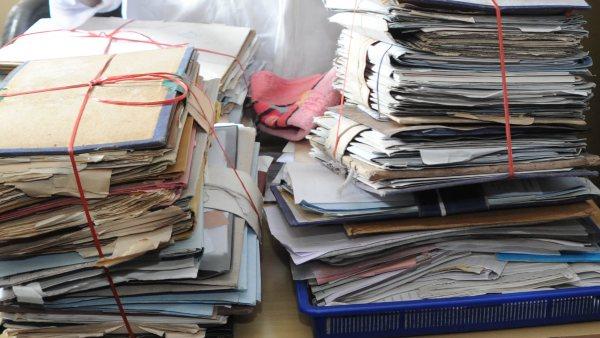
Physical documents remain important for housing societies. Original agreements, certificates, sanctioned plans, signed minutes, legal documents, and other records may need to be preserved carefully. The difficulty begins when committees need to find a specific document from years of accumulated files. Files may be stored in different
. Older documents may be mixed with newer records. File names may not follow a consistent system. Important papers may have been moved during office renovations or handed to consultants for specific work. Even when the document exists, finding it can become a manual search exercise. Paper storage therefore provides preservation, but not necessarily efficient retrieval.
2. Digital Copies Make Information Easier to Find
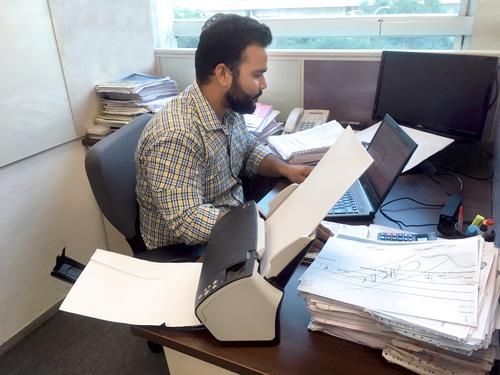
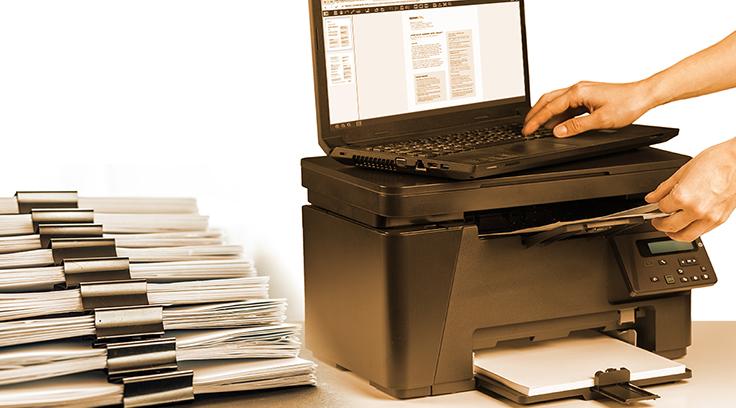
Digitisation changes the retrieval process significantly. Instead of opening multiple cupboards and searching through physical files, authorised users can search a structured digital repository using document names, categories, dates, subjects, or other relevant information. For example, if a committee needs an old structural audit report, the objective should not be to remember which cupboard contains the file. The record should be identifiable through a structured digital system. The same applies to vendor agreements, insurance documents, AGM minutes, audit reports, building approvals, maintenance records, and redevelopment documents. Digital retrieval is valuable because it reduces the time between “We need this document” and “Here is the document.”
3. Scanning Documents Alone Does Not Solve the Problem
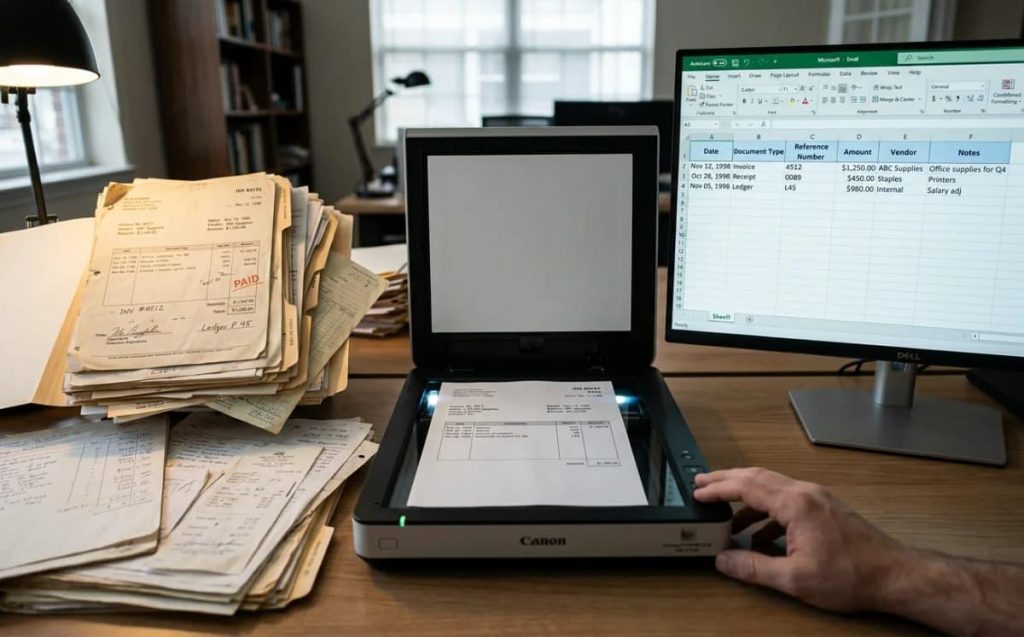
A common misconception is that document management is complete once paper files have been scanned. It is not. A folder containing thousands of PDFs with names such as scan001.pdf, scan002.pdf, and document-final-new.pdf may technically be digital, but it can still be extremely difficult to use. Effective retrieval requires structure. Documents should have consistent naming, logical categories, relevant dates, appropriate access controls, and a clear system for identifying the latest or valid version. The objective is not simply to convert paper into PDF files. The objective is to create information that can be found, understood, and used.
4. Digital Retrieval Reduces Dependence on Individual Committee Members
One of the biggest risks in housing society documentation is dependency on individuals. A particular committee member may know where old records are stored. A former Secretary may have important documents in an email account. A Treasurer may maintain financial records on a personal computer. A facility manager may know where technical reports are kept. This creates an institutional knowledge problem. When these individuals leave the committee or stop managing the records, valuable information can become difficult to access. A structured digital repository reduces this dependency. The records belong to the society, not to the individual who happened to manage them at the time.
5. Retrieval Becomes Critical During Audits, Repairs and Redevelopment
Document retrieval becomes particularly important when the society faces a major project or professional review. During an audit, consultants may require historical records. During major repairs, engineers may need previous reports, drawings, or maintenance history. During redevelopment, committees may need property documents, member records, plans, approvals, financial information, and previous correspondence. Searching for these documents after the project has already started creates unnecessary pressure. A society that maintains organised records continuously is better prepared when an important decision suddenly requires historical information. Good document management is therefore not only an administrative function. It is part of long-term risk management.
6. Digital Does Not Mean Physical Records Should Be Discarded
Moving towards digital retrieval does not mean societies should immediately dispose of physical documents. Original records may have legal, historical, or evidentiary importance. Important physical documents should therefore be preserved appropriately even after digitisation. The better approach is to give each format a clear purpose. Physical records provide original-document preservation. Digital records provide accessibility and retrieval. Together, they create a stronger documentation system than relying entirely on either one.
7. A Good Retrieval System Needs Governance
Technology alone cannot solve poor document management. The Managing Committee should establish basic rules for how documents are added, categorised, named, updated, accessed, and archived. Before digitising or reorganising society records, committees should ask: 1. What documents do we currently have? 2. Which important records are missing? 3. Where are the physical originals stored? 4. Which documents need to be digitised first? 5. How will digital documents be categorised and named? 6. Who can access sensitive records? 7. How will new documents be added? 8. How will old and duplicate versions be handled? These questions help turn document storage into a proper retrieval process.
Conclusion
Paper files are not the problem. Unstructured document management is. Physical records will continue to have an important role in housing societies, particularly for original and legally significant documents. But relying entirely on physical storage makes retrieval slow, dependent on individuals, and increasingly difficult as records accumulate. Digital retrieval provides the missing layer of accessibility. It allows societies to preserve important information while making that information easier to locate, review, share, and use. The objective should not be to become completely paperless. It should be retrieval-ready. A well-managed housing society should not have to ask, “Where is that document?” It should be able to ask, “What information do we need?” and retrieve it quickly. #HousingSocietyManagement #DocumentManagement #DigitalRecords #SocietyGovernance #HousingSocieties #BlockPilot