Why Solar Panel Cleaning Matters for Housing Societies in Mumbai
Published: 25th Nov 2026•By BlockPilot
Co-Op Housing Insights
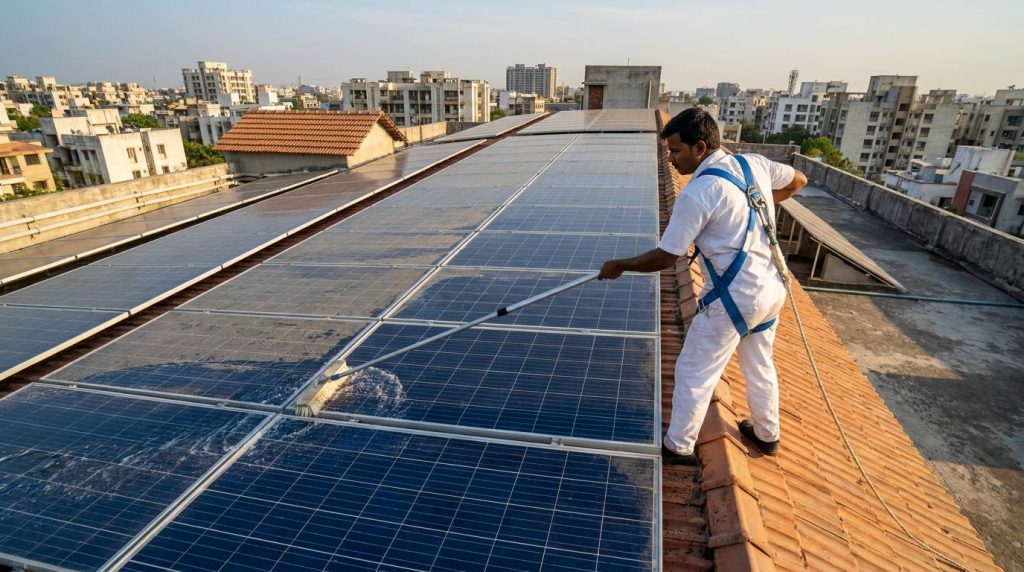
Solar panels are designed to generate electricity for many years, but their performance depends on how well they are maintained. In Mumbai, dust, pollution, bird droppings, salt-laden air, and monsoon residue can accumulate on panels. When cleaning is ignored, generation can gradually fall without the society immediately noticing. Solar panel cleaning helps housing societies maintain energy generation and system efficiency. Dust, bird droppings, pollution, and other deposits can reduce the sunlight reaching panels. Regular cleaning, combined with performance monitoring, helps identify problems early and protect the society’s solar investment.
1. Solar Panels Need Regular Cleaning to Perform Properly
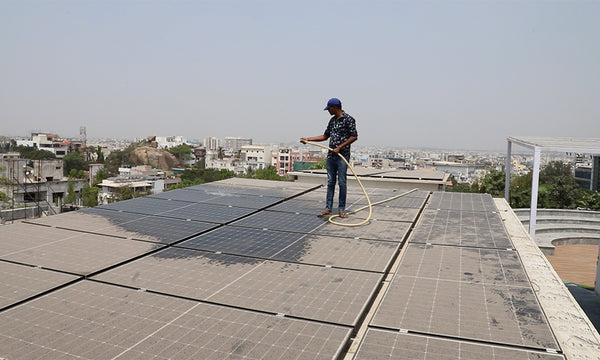
Solar panels work by converting sunlight into electricity. When their surface becomes covered with dust, dirt, bird droppings, or other deposits, less sunlight can reach the panel surface. Mumbai’s environment can make this more noticeable. Construction dust, traffic pollution, humidity, bird activity, and residue after the monsoon can all contribute to surface deposits. Cleaning therefore should not be treated as an occasional housekeeping activity. It should form part of the solar system’s regular maintenance plan.
2. Dirty Panels Can Reduce Solar Generation
A society may have invested significantly in a rooftop solar system expecting it to reduce common-area electricity expenses. If generation gradually declines, the financial benefit of the system can also be affected. The important point is that lower generation may not always be obvious. The panels may look functional, the inverter may be running, and there may be no visible equipment failure. This is why societies should compare actual generation with expected performance and investigate unusual drops instead of assuming that the system is operating normally.
3. Mumbai Weather Makes Cleaning More Important
Mumbai receives heavy rainfall, but rain does not automatically keep solar panels clean. Rainwater can remove some loose dust, while leaving behind dirt, mineral deposits, and other residue after drying. Bird droppings can also remain on the panel surface. During periods of high pollution, construction activity or limited rainfall, deposits can accumulate faster. The cleaning frequency should therefore depend on the actual site condition rather than following a fixed assumption that rain will take care of the panels.
4. Cleaning Should Be Done Without Damaging the Panels
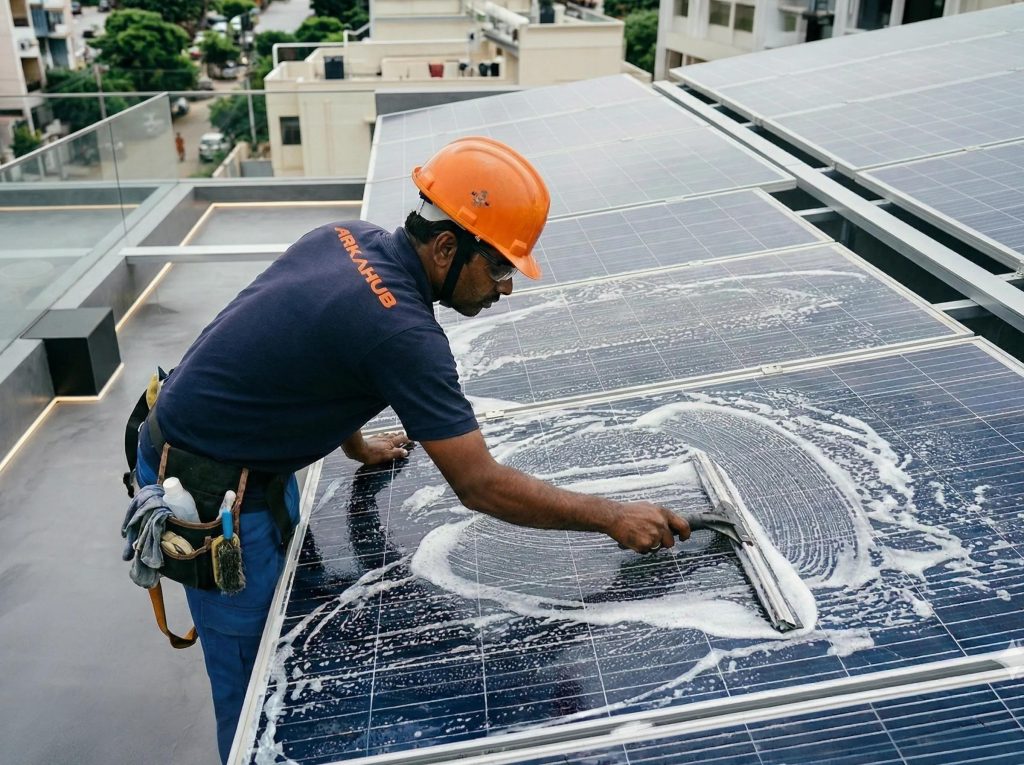
Solar panel cleaning is simple in principle, but the method matters. Societies should ensure that the maintenance team or solar vendor uses an appropriate cleaning process and does not use methods that could damage the panel surface. Safe access to rooftop panels is equally important.
Before finalising a cleaning service, the committee should understand:
How frequently will the panels be cleaned?
What cleaning method will be used?
Is water included in the service?
Who will provide cleaning equipment?
How will workers safely access the panels?
Will bird droppings and stubborn deposits be removed?
A low-cost cleaning service is not useful if it creates safety or equipment risks.
5. Cleaning Is Also an Opportunity to Identify Problems
A cleaning visit can provide an opportunity to notice visible issues with the solar installation. The maintenance team may identify damaged panels, loose cables, unusual dirt accumulation, shading caused by new structures, bird nesting or other visible conditions that require attention. Cleaning should not replace technical inspection, but regular maintenance creates more opportunities to notice problems before they become larger. Societies should record important observations instead of depending only on verbal communication from the cleaning team.
6. Solar Maintenance Should Include Generation Monitoring
Cleaning alone does not guarantee good solar performance. A well-managed solar system should be monitored through generation data. If electricity generation falls unexpectedly even after cleaning, the society should investigate whether there is another reason.
The committee should maintain basic records such as:
Monthly solar generation
Major maintenance dates
Cleaning dates
Inverter-related observations
Reported faults
Repairs and replacements
Changes affecting rooftop shading
Over time, these records help the society understand whether the solar system is delivering the expected benefit.
7. Solar Cleaning Should Be Part of the Society’s Maintenance Plan
One of the common mistakes is to install solar panels as a one-time project and then focus only on the electricity savings. A solar system is a long-term asset. Its maintenance should therefore be planned along with other building infrastructure. The society should clearly define who is responsible for cleaning, how often it will be done, how performance will be monitored, and how technical problems will be reported. The maintenance agreement should also clearly distinguish routine cleaning from technical repairs so that there is no confusion when a problem occurs.
Before Approving Solar Panel Cleaning, Ask These Questions
When were the panels last cleaned?
How frequently should our panels be cleaned based on actual site conditions?
Are bird droppings, dust, and other deposits included in the cleaning scope?
Does the vendor have safe rooftop access arrangements?
Will the cleaning team report visible defects?
How will solar generation be monitored before and after cleaning?
Are cleaning and technical maintenance covered under separate scopes?
Will cleaning records be maintained for future committees?
Conclusion
Solar panels are a long-term investment for a housing society, and their value depends on continued performance, not just installation. In Mumbai, regular cleaning can help maintain panel efficiency, while generation monitoring helps the society identify when cleaning is not the only issue.
A solar system should not simply be installed and forgotten. It should be maintained, monitored, and managed as a long-term society asset.