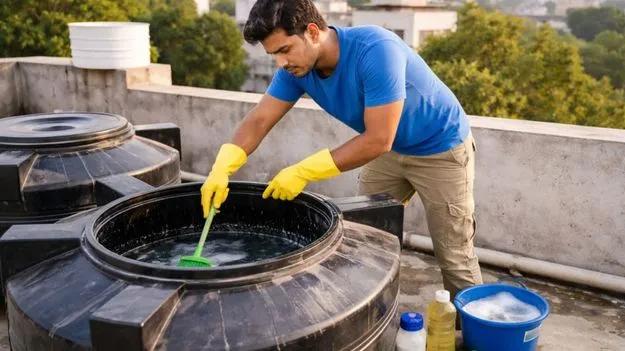
Why Water Tank Cleaning Is More Critical Than You Think
Published: 13th Oct 2026•By BlockPilot
Co-Op Housing Insights
Water tank cleaning is often treated as routine housekeeping work in housing societies. But the condition of an overhead or underground water tank directly affects water quality, hygiene, maintenance, and resident safety. Learn why periodic cleaning should be treated as an essential building maintenance activity rather than a task completed only when the tank appears dirty.
Why is water tank cleaning important for housing societies?
Water tanks can accumulate sediment, dust, rust particles, organic matter, algae, and other contaminants over time. Regular cleaning and inspection help maintain better water hygiene, identify physical defects early, and reduce the risk of problems spreading through the society’s water supply system. Water is one of the most critical services in any housing society. Residents depend on it every day for drinking, cooking, bathing, cleaning, and other essential activities. Yet the infrastructure through which that water is stored often receives far less attention than visible building assets such as lifts, lobbies, or gardens. Over time, underground and overhead tanks can develop sediment deposits, sludge, algae growth, unpleasant odours, and other hygiene concerns. Covers may become damaged, access points may remain open, and internal surfaces may deteriorate. Because most of these conditions remain hidden from daily view, problems can continue without residents or committee members realising their extent. Water tank cleaning should therefore not be viewed simply as removing dirt from a tank. It is part of maintaining the reliability and hygiene of the society’s water infrastructure.
1. A Tank Can Look Fine From Outside but Still Need Cleaning
One of the biggest misconceptions is that a water tank only needs cleaning when the water looks visibly dirty. In reality, much of what accumulates inside a tank may not be immediately visible from outside. Sediment can settle at the bottom. Organic matter can accumulate over time. Algae may develop in areas exposed to light, while rust or scale may collect on internal surfaces and fittings. Because tanks are generally closed and difficult to inspect, residents rarely know their actual condition. This is why cleaning should be based on a planned schedule and proper inspection rather than waiting for visible signs of contamination.
2. Sediment and Sludge Do Not Disappear on Their Own
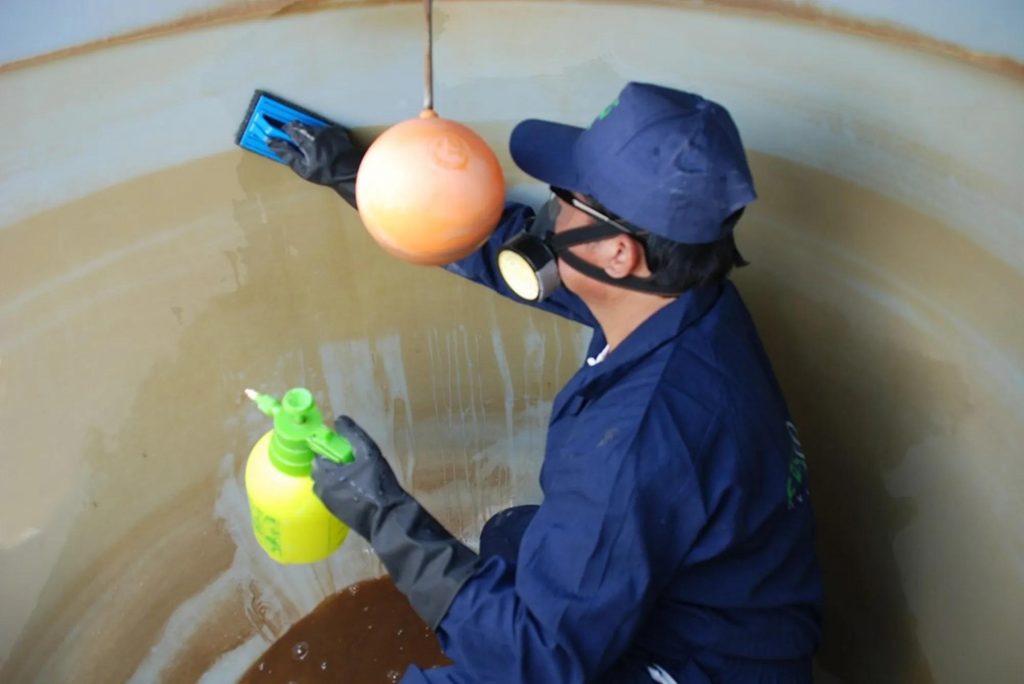
Water entering a society’s storage tank can carry fine particles and suspended matter. Over repeated filling and emptying cycles, heavier material can settle at the bottom. As the accumulation increases, cleaning becomes more difficult and the effective storage condition of the tank can deteriorate. A tank that has not been cleaned for a long period may require significantly more effort to restore. Simply draining the water does not mean the tank has been properly cleaned. Deposits on the floor, walls, corners, and fittings need to be physically removed through an appropriate cleaning process. The objective should be to restore the tank to a hygienic condition, not merely make it look empty.
3. Tank Cleaning Is Also an Opportunity to Inspect the Infrastructure
A proper tank-cleaning exercise provides an opportunity to look at the physical condition of the tank and its associated components. During cleaning, societies may identify cracks, damaged waterproofing, corrosion, loose fittings, damaged covers, leakage points, deteriorated pipes, or other issues that are difficult to observe during normal operations. This is particularly important for ageing buildings where water infrastructure may have been in service for many years. Cleaning should therefore not be treated as an isolated housekeeping activity. It can also become part of preventive maintenance and asset monitoring.
4. Overhead and Underground Tanks Need the Same Attention
Many societies focus primarily on overhead tanks because they are easier to associate with the final water supply. Underground tanks, however, are equally important because they form an essential part of the storage and distribution system. Depending on the building’s configuration, water may move through municipal supply lines, underground storage, pumps, overhead tanks, and internal distribution networks before reaching individual homes. If one part of this chain is poorly maintained, the overall water system can be affected. A society should therefore maintain cleaning records for all relevant storage tanks rather than focusing only on the most visible or accessible ones.
5. Poor Cleaning Practices Can Create Their Own Problems
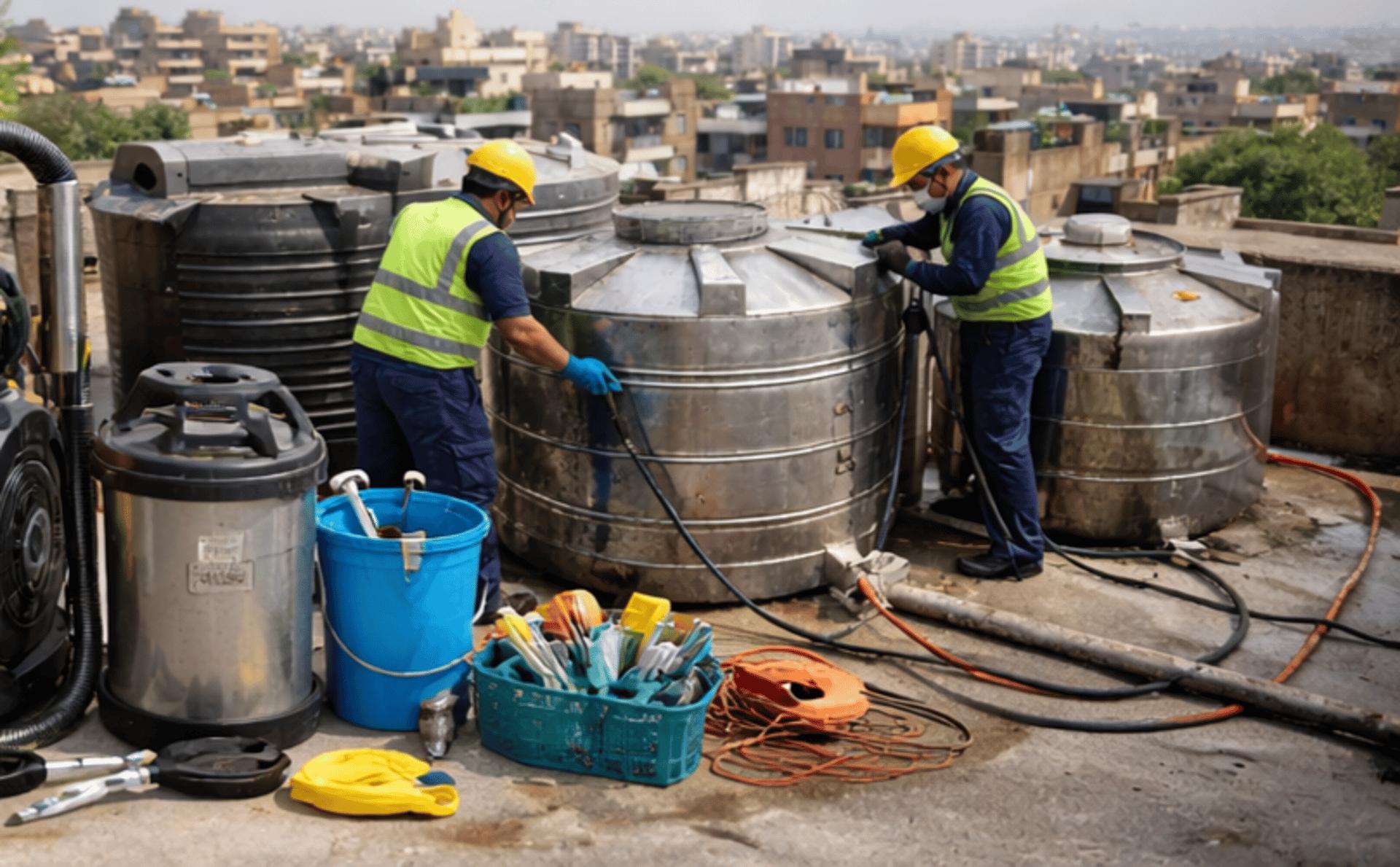
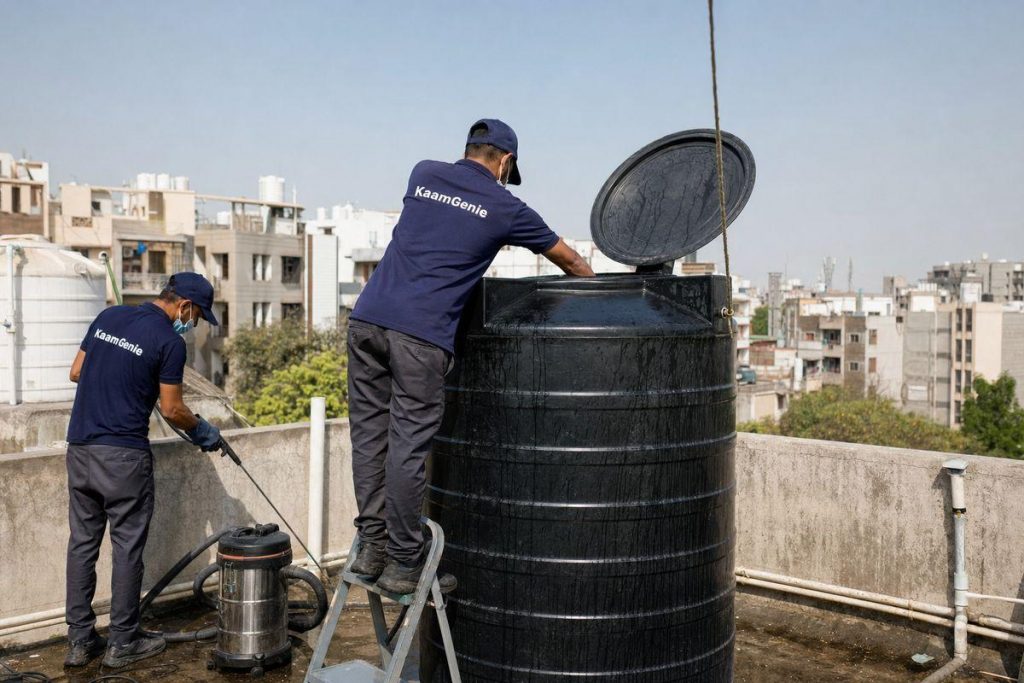
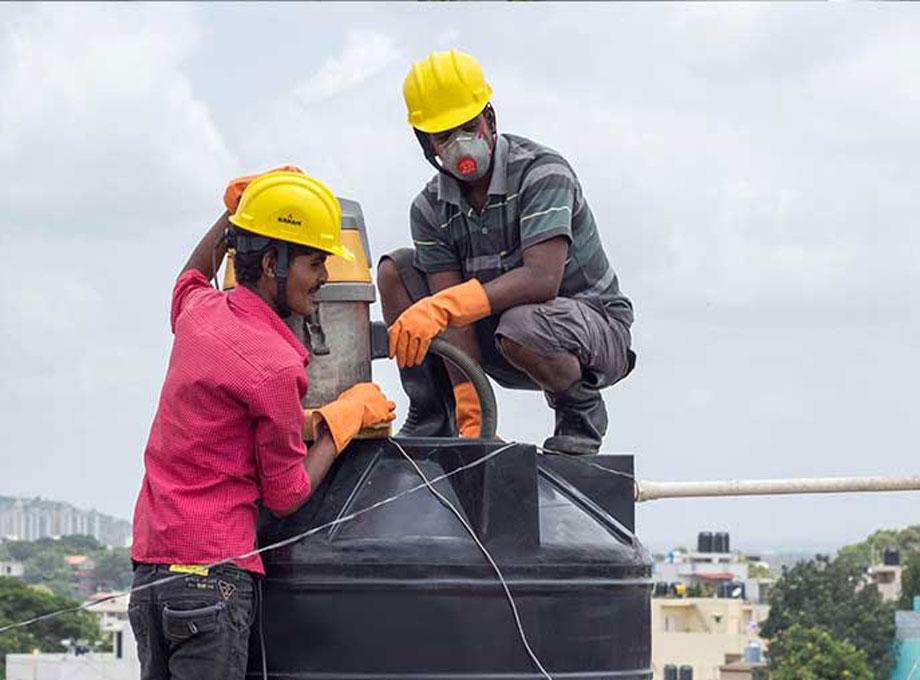
Water tank cleaning should not be treated as simply sending workers into a tank with basic equipment and asking them to wash it. The work involves confined spaces, wet surfaces, access challenges, electrical and pumping equipment, and hygiene considerations. Appropriate safety procedures, equipment, supervision, and trained personnel are important. Societies should also ensure that cleaning chemicals or disinfectants, where used, are appropriate for the intended application and that the tank is properly rinsed and restored before being brought back into service. The lowest quotation may not necessarily represent the safest or most effective cleaning solution.
6. A Cleaning Certificate Is Not a Substitute for Actual Cleaning
Some societies focus heavily on obtaining a certificate or completion document after the work. Documentation is useful, but the certificate itself does not improve water quality. Committees should understand what was actually done. Before approving a tank-cleaning job, they should ask:
1. When was each tank last cleaned? 2. Which tanks are included in the scope? 3. Will the tank be completely drained before cleaning? 4. Will sludge and deposits be physically removed? 5. Will the internal surfaces and fittings be inspected? 6. What cleaning or disinfection process will be followed? 7. Will before-and-after photographs or a work report be provided? 8. Will any defects identified during cleaning be separately reported?
7. Water Tank Cleaning Should Become Part of Preventive Maintenance
The strongest approach is to make water tank cleaning a planned maintenance activity rather than an emergency response. Societies should maintain a record of tank locations, capacities, previous cleaning dates, observations, identified defects, vendor details, and next scheduled cleaning. The same record can also help future committees understand the history of the society’s water infrastructure. Regular planning also makes vendor comparison easier because the scope of work can be clearly defined before quotations are requested. Water infrastructure should receive the same structured attention as other critical building assets. When cleaning, inspection, documentation, and follow-up are connected, committees can identify problems earlier and avoid unnecessary disruption.
Conclusion
Water tank cleaning may appear to be a routine maintenance task, but its importance extends far beyond keeping a tank clean. It supports water hygiene, helps identify infrastructure defects, improves preventive maintenance, and gives housing societies greater visibility into one of their most critical building systems.
The real risk is not simply a dirty tank. It is an unseen problem that remains unnoticed because nobody is regularly looking inside. A well-managed housing society does not wait for residents to complain about water quality before inspecting its tanks. It creates a planned process for cleaning, inspection, documentation, and follow-up.
Water storage is an invisible part of everyday life. That is exactly why it should never become an invisible maintenance responsibility.