5 Signs Your Housing Society Is Not Truly Fire Safe
Published: 3rd Jun 2026•By BlockPilot
Co-Op Housing Insights
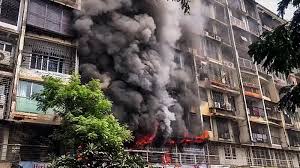
A fire audit report sitting in a file does not make a housing society fire-ready. In many buildings, committees assume that installing equipment once is enough, while the real risk quietly builds up in ignored systems, missing documents, and poor execution. The gap is not awareness. It is governance and follow-through.
What are the signs that a housing society is not fire-ready? A housing society is not fire-ready if it lacks updated fire compliance documents, has poorly maintained firefighting systems, unclear governance roles, irregular audits, and no execution plan for emergency response. Fire readiness depends on continuous systems, not one-time installations
1. Fire Compliance Documents Exist, But Are Not Updated or Actionable
In many housing societies, fire compliance documents are treated as a one-time requirement rather than a living system. Certificates, NOCs, and inspection reports may exist, but they are often outdated or not aligned with the current building condition. This becomes especially risky during redevelopment phases or structural changes where fire systems must be revalidated. The issue is not the absence of documents, but their disconnect from reality. Committees may not track expiry timelines or understand conditional approvals mentioned in reports. This leads to silent non-compliance, which surfaces only during inspections or emergencies. A common example is when a housing society receives a fire NOC during a previous inspection cycle but fails to track renewal requirements, equipment upgrades, or changes in building usage. During a subsequent inspection, committees discover that the original approval conditions are no longer being met. Many societies face challenges not because documents are missing, but because documents are not actively managed as part of a governance framework. These gaps often overlap with society audit issues, where documentation exists but lacks operational validity. Without a structured system to track, review, and act on these documents, compliance remains superficial and unreliable.
2. Governance Gaps: No Clear Ownership of Fire Safety Responsibilities
Fire safety in a housing society often suffers from unclear governance structures. Responsibility is either loosely assigned or assumed to be shared, which in practice means no one owns it fully. Managing committees change, and with each transition, continuity is lost. This becomes more complex when technical vendors, facility managers, and committee members operate in silos. Decisions are delayed, maintenance is inconsistent, and accountability is diluted. This challenge becomes particularly visible when committee members change. Incoming Managing Committees often inherit fire safety responsibilities without receiving structured handovers, maintenance histories, or compliance trackers. Without continuity, important inspections, vendor follow-ups, and corrective actions are delayed. Effective governance requires systems that survive committee transitions and maintain operational consistency. These governance gaps are similar to housing society accounting mistakes where financial oversight exists, but ownership is weak. Without defined roles, escalation protocols, and periodic reviews, fire safety becomes reactive instead of proactive. A structured governance framework ensures that fire readiness is not dependent on individuals but embedded into the system.
3. Fire Systems Installed but Poorly Maintained
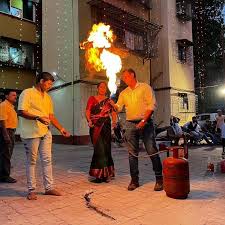
Many housing societies invest in firefighting equipment during construction or redevelopment, but maintenance is where the real failure begins. Fire extinguishers expire, hydrant systems lose pressure, and alarms become non-functional due to neglect. The challenge is not installation but sustained execution. Vendors may conduct routine checks, but without proper supervision and validation, these checks become tick-box activities. This reflects a broader pattern seen in accounting errors in housing societies India, where processes exist but lack verification and control. In real scenarios, societies discover system failures only during mock drills or actual emergencies. For example, housing societies have encountered situations where hydrant systems lacked adequate pressure, extinguishers had crossed validity dates, or alarm systems were disconnected during maintenance work and never restored. These issues often remain invisible during routine operations but become critical when systems are needed most. Fire readiness depends on verification, not assumptions. A well-maintained fire system requires regular audits, performance checks, and documented maintenance logs. Without this, even the best infrastructure becomes ineffective.
4. Society Audit Issues Do Not Capture Fire Readiness Gaps
Financial audits and society audit issues typically focus on accounts, compliance filings, and statutory records. However, operational risks like fire safety are rarely integrated into audit frameworks. This creates a false sense of security where societies believe they are compliant because audits are completed. Many housing society committees focus heavily on financial audits while operational risks receive limited attention. As a result, fire safety records, maintenance logs, inspection observations, and corrective actions remain disconnected from governance reviews. A more mature approach combines compliance audits with operational assessments to provide a complete picture of preparedness. In reality, fire readiness requires a parallel audit layer that evaluates systems, documents, and execution together. For example, a society may show vendor payments for maintenance, but there is no verification of actual work done. This mirrors housing society accounting mistakes where numbers are recorded without validating outcomes. Understanding how to avoid audit problems in societies also means linking financial records with physical verification. When audits evolve from documentation checks to system validation, fire readiness improves significantly.
5. No Emergency Execution Plan or Resident Preparedness
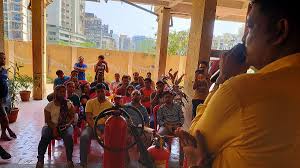
Even societies with functional systems often fail in execution due to the absence of a clear emergency plan. Fire readiness is not just about infrastructure. It is about how quickly and effectively people respond during a crisis. In many housing societies, residents are unaware of evacuation routes, assembly points, or emergency contacts. Mock drills are either not conducted or treated as formalities. In high-rise housing society buildings, even a few minutes of confusion can significantly affect emergency response. Residents may not know evacuation routes, elderly occupants may require assistance, and emergency teams may struggle with coordination. Regular drills, awareness sessions, and clearly defined response protocols help convert compliance into actual preparedness. This gap becomes critical in high-rise buildings where response time directly impacts safety. Committees focus on compliance but overlook preparedness. A practical approach involves periodic drills, clear signage, resident awareness programs, and defined response teams.
Conclusion
Fire safety in a housing society is not a one-time activity. It is a continuous system that depends on governance, updated documents, verified execution, and resident preparedness. Many societies are not failing due to lack of intent. They are struggling due to fragmented systems and unclear accountability. A fire extinguisher mounted on a wall does not make a building fire-ready. A fire audit report stored in a file does not guarantee safety. Real preparedness comes from systems that are monitored, tested, documented, and continuously improved. The difference between compliance and readiness lies in execution. The issue is not lack of effort. It is lack of structure, clarity, and control. Until housing societies address these gaps, fire safety will remain a compliance exercise on paper rather than a reliable protection system in practice.